
Introduction
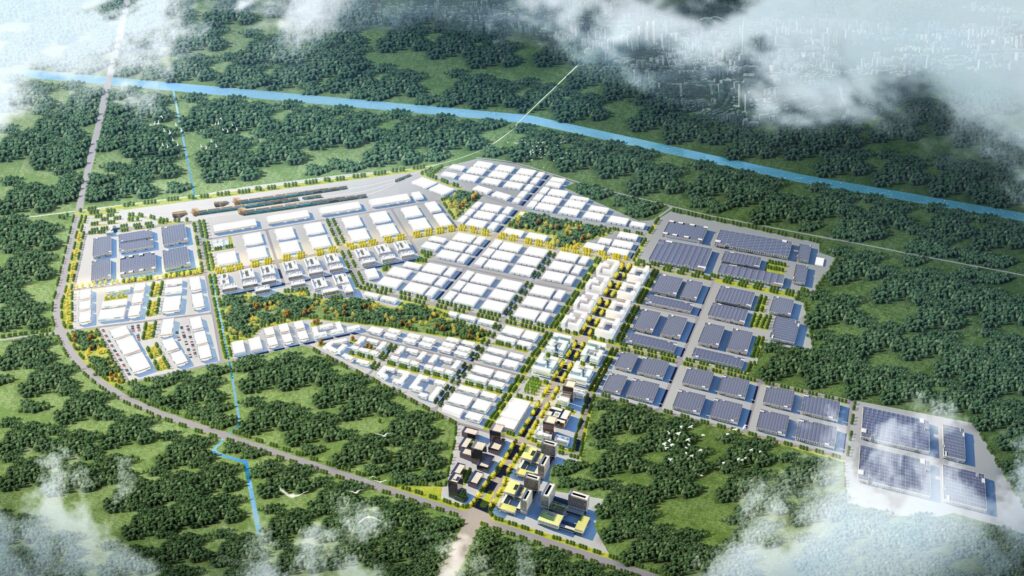
Special Economic Zones (SEZs) and industrial (manufacturing) parks are among the key instruments of Uzbekistan’s investment and industrial development policy. The government actively uses these mechanisms to attract foreign direct investment, promote export-oriented manufacturing, introduce modern technologies, and create new jobs. In recent years, the regulatory framework and governance model of SEZs have undergone significant modernization, and a number of systemic reforms entered into force in 2025–2026.
This article is based exclusively on official and verified sources, including legal regulations of the Republic of Uzbekistan, materials published by government authorities, international organizations, and officially released investment reports, including those published in PDF format.
What are SEZs and Industrial Parks in Uzbekistan?
Special Economic Zones (SEZs)
According to the Law of the Republic of Uzbekistan “On Special Economic Zones,” a SEZ is a territory with clearly defined boundaries where a special legal regime for entrepreneurial activity applies. This regime includes tax, customs, and currency preferences granted to resident companies.
Official source:
- Law of the Republic of Uzbekistan “On Special Economic Zones” https://lex.uz/docs/4737514
The main objectives of SEZs include:
- attracting investment;
- development of industrial production;
- increasing exports of high value-added products;
- localization of modern technologies and advanced management practices.
Industrial Parks and Small Industrial Zones
Small Industrial Zones (SIZs) and industrial parks are primarily designed to support small and medium-sized enterprises. They are established on the basis of ready-made engineering and production infrastructure, enabling entrepreneurs to launch manufacturing operations with relatively low initial capital requirements.
Their establishment and operation are regulated by decrees of the President of the Republic of Uzbekistan and resolutions of the Cabinet of Ministers.
Scale and Structure of Zones (Official Data)
According to data from the Ministry of Investment, Industry and Trade of the Republic of Uzbekistan and official investment reports:
- number of Special Economic Zones — 28;
- number of Small Industrial Zones — 389;
- number of Technoparks — 23;
- number of sectoral and territorial industrial clusters — 355.
More than 1,000 enterprises currently operate within SEZs, while nearly 3,000 enterprises are located in Small Industrial Zones.
Official source (PDF):
- Uzbekistan Investment Report 2025, Ministry of Investment, Industry and Trade of the Republic of Uzbekistan: https://invest.miit.uz/document/services/portal/MAIN%20PAGE/uzbekistan-report-2025_final_spread.pdf
The most advanced in terms of readiness for industrial cooperation projects are large industrial parks located in the city of Tashkent, Tashkent Region, and Jizzakh Region. These parks were established to support innovative manufacturing and attract investment into the real sector of Uzbekistan’s economy.
Sectoral Profile of SEZs and Industrial Parks
Residents of SEZs and industrial parks primarily operate in the following sectors:
- mechanical engineering and automotive components;
- electrical equipment and electronics;
- pharmaceuticals and medical industries;
- production of construction materials;
- food processing and agro-industrial manufacturing;
- textile and garment manufacturing;
- chemical and petrochemical industries.
Such sectoral diversification helps reduce the economy’s dependence on raw material exports and supports sustainable industrial development.
Incentives and Conditions for Residents
Tax and Customs Incentives
Residents of SEZs are entitled to:
- exemptions from property tax, land tax, and corporate income tax for a fixed period depending on the volume of investment;
- exemption from customs duties on the import of equipment, raw materials, and components, excluding value-added tax and certain fees.
Legal basis:
- the Law “On Special Economic Zones”;
- decrees of the President of the Republic of Uzbekistan.
Land Use and Infrastructure Conditions
- land plots are provided to residents on a lease basis for a period of up to 49 years;
- key engineering infrastructure, including electricity, gas, water supply, and road access, is developed at the expense of the state or zone management companies;
- a “one-stop-shop” principle applies to administrative procedures for SEZ residents.
Official source:
Key Changes and Reforms in 2025–2026
Indefinite Legal Status of SEZs
According to the Presidential Decree of March 4, 2025, Special Economic Zones were granted an indefinite operating status. Previously, SEZs were established for a limited period.
This reform is aimed at:
- increasing investment predictability;
- attracting long-term projects;
- reducing regulatory risks for investors.
Source:
New Requirements for Establishing Zones
Starting from 2025:
- SEZs and industrial zones are prohibited from being located on agricultural land;
- stricter requirements are introduced for the economic justification of new zones;
- priority is given to export-oriented and technology-intensive projects.
Source:
- Ministry of Investment, Industry and Trade of the Republic of Uzbekistan — https://invest.gov.uz
Eco-Industrial and Innovation Parks
In cooperation with the United Nations and other international organizations, Uzbekistan has launched pilot projects of eco-industrial parks. These initiatives are focused on:
- improving resource efficiency;
- reducing emissions;
- implementing ESG (Environmental, Social, and Governance) principles.
Official source:
- UN Uzbekistan — https://uzbekistan.un.org
Economic Impact and Statistics
According to the State Statistics Committee:
- industrial output of SEZ enterprises increased by more than 40% during the first nine months of 2025 compared to the same period of the previous year;
- exports of goods produced by SEZ residents continue to demonstrate steady growth.
Source:
- State Committee on Statistics of the Republic of Uzbekistan — https://stat.uz
Opportunities and Constraints for Businesses
Opportunities
- reduced fiscal burden during the initial phase of projects;
- access to ready-made infrastructure without significant capital expenditures;
- government support for export activities;
- integration into international supply chains.
Constraints and Risks
- the need for strict compliance with residency requirements;
- dependence of project performance on the quality of management of a specific zone;
- possible changes in sectoral priorities of state industrial policy.
With a well-informed selection of a specific zone and a realistic business plan, SEZs and industrial parks remain among the most effective instruments for launching and scaling manufacturing businesses in Uzbekistan.
Conclusion
By 2026, Uzbekistan’s Special Economic Zones and industrial parks represent a mature and institutionally established mechanism for business support. The introduction of an indefinite legal status, continued infrastructure development, and a strong focus on exports and sustainable development significantly enhance their attractiveness for long-term investment.
For entrepreneurs and investors, the key success factor remains a thorough assessment of a specific zone, residency conditions, and alignment of the project with national development priorities.
Official Sources and Documents
- Law of the Republic of Uzbekistan “On Special Economic Zones” — https://lex.uz
- Ministry of Investment, Industry and Trade of the Republic of Uzbekistan — https://invest.gov.uz
- Uzbekistan Investment Report 2025 (PDF) — https://invest.miit.uz
- State Committee on Statistics of the Republic of Uzbekistan — https://stat.uz
- Government Portal — https://gov.uz
- UN Uzbekistan (eco-industrial parks) — https://uzbekistan.un.org